How to Get Rid of Skin Tags (and Why Not to Do It at Home)
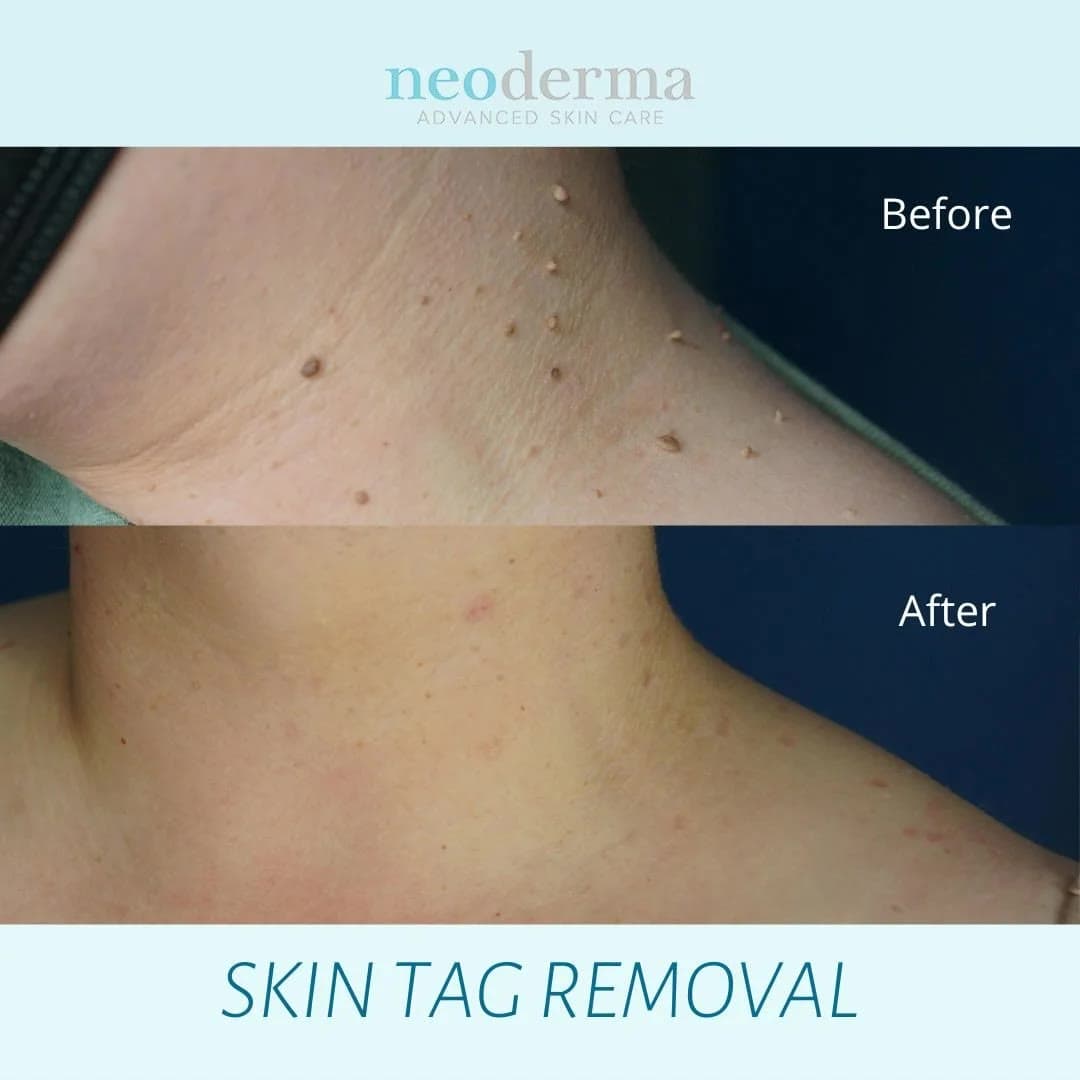
Skin tags are benign growths, but the safest way to remove one is in a medical office — not with string, clippers or a freeze kit. At Neoderma in Anaheim a provider first confirms the growth is benign, then removes it by desiccation: $195 covers up to 10 small tags, cleared in one 15–30 minute visit.
Medically reviewed by Sal Nadkarni, DO · Last updated August 6, 2026
What is a skin tag, actually?
A skin tag is a small, soft, benign growth — a little flap of ordinary skin on a narrow stalk. Almost everyone develops at least one eventually. They form where skin rubs against skin or clothing, which is why they cluster on the neck, underarms and eyelids and show up along the chest, under the bra line and in the groin. Friction is the pattern, which is also why they tend to arrive in groups rather than one at a time.
They are harmless. They are also genuinely irritating — they catch on necklaces, snag on razors and rub raw under clothing, which is reason enough to want them gone.
Are you sure it's a skin tag?
This is the part worth reading twice, and it is why it comes before everything else. You cannot reliably identify a skin tag by looking at it — and neither can we, from a photo. Moles, seborrheic keratoses and warts can all look tag-like to the naked eye, and, rarely, a raised spot is something that needs proper medical evaluation rather than cosmetic removal. Sorting that out takes an in-person look from someone trained to do it.
So before anything is removed, have the growth examined if it does any of the following: bleeds without being knocked; changes in size, shape or color; itches persistently; has an irregular border or more than one color; or simply looks different from the other spots on your body. None of those signs means something is wrong. They mean the question deserves an answer before you make the growth disappear.
That is why every removal at our clinic starts with a provider confirming the growth is a benign tag. Desiccation is for benign growths like skin tags; moles are a different matter, and any mole that is new, changing, bleeding or irregular should be evaluated medically before removal is even considered. If our providers see anything suspicious at your consultation, we refer you to a dermatologist rather than treat it. That is the correct order of operations, even when it is not the fast one.
Why home removal goes wrong
Most people reading this have already come across the standard advice: tie it off with dental floss, snip it with nail clippers, or pick up a freeze kit at the drugstore. The urge is understandable — a skin tag feels trivial, barely attached, and DIY looks like the sensible option. Each of those methods, though, fails in a specific and predictable way.
Tags have their own blood supply, so cutting or clipping one at home bleeds more than people expect and can be hard to stop. Household tools are not sterile, and an open wound in a warm skin fold — a neck, an underarm — is an easy place for infection to start. Tying a tag off frequently strangles the visible part while leaving the base behind, so you end up with a lingering bump instead of clear skin. Freeze kits are blunt by design: they cannot be aimed precisely, so they blister and damage healthy skin around the tag, which is how home removal leaves a scar or a lasting dark mark — a particular risk on deeper skin tones. They also cannot be used anywhere near the eyes.
And then the failure that matters most and shows up least: if the growth was not a skin tag, removing it at home destroys the one thing a provider would have needed to look at.
How in-office removal actually works
We use desiccation. A fine-tipped electrode touches the tag and dries it out at its base in a few seconds — no cutting, no stitches, no liquid nitrogen spreading across nearby skin. The tag is not pulled off in the room. It is dried where it stands, then scabs over the following days and falls away on its own, typically within one to two weeks.
Topical numbing is included, which is why we ask you to arrive an hour before your appointment — the cream needs that long to work. The treatment itself then runs 15 to 30 minutes, and because each tag takes only seconds, most clients clear every tag they have in that one visit rather than booking a series.
| Stage | What to expect |
|---|---|
| Before your visit | Arrive an hour early so the included topical numbing cream can take effect |
| In the room | A provider confirms each growth, then dries it at the base — seconds per tag, 15–30 minutes in total |
| Immediately after | Back to your day; the treated tags are still in place and beginning to dry |
| Days 1–14 | Each treated tag scabs and falls off on its own — leave the scab alone |
| After | That tag is gone permanently, though new tags can still form elsewhere over time |
What about eyelids and other delicate areas?
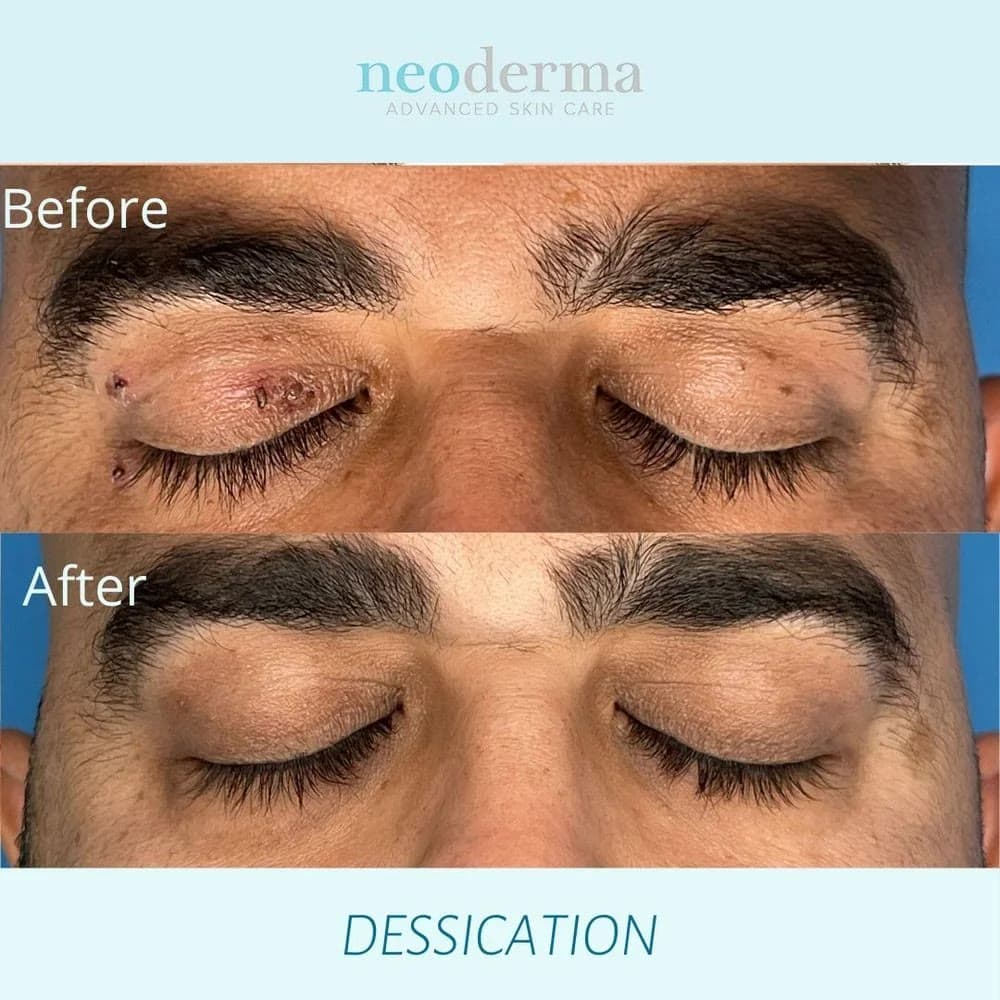
Eyelids are one of the most common areas we treat, which surprises people who assume delicate skin means no options. It is the opposite. Because the electrode tip touches only the tag itself and nothing around it, desiccation is precise enough for the lid — precision no freeze kit can offer, which is exactly why those kits carry warnings about the eye area. The same precision applies to the neck, the underarms, the face and the rest of the body, and it works across every skin tone.
What about the small dark bumps on deeper skin tones?
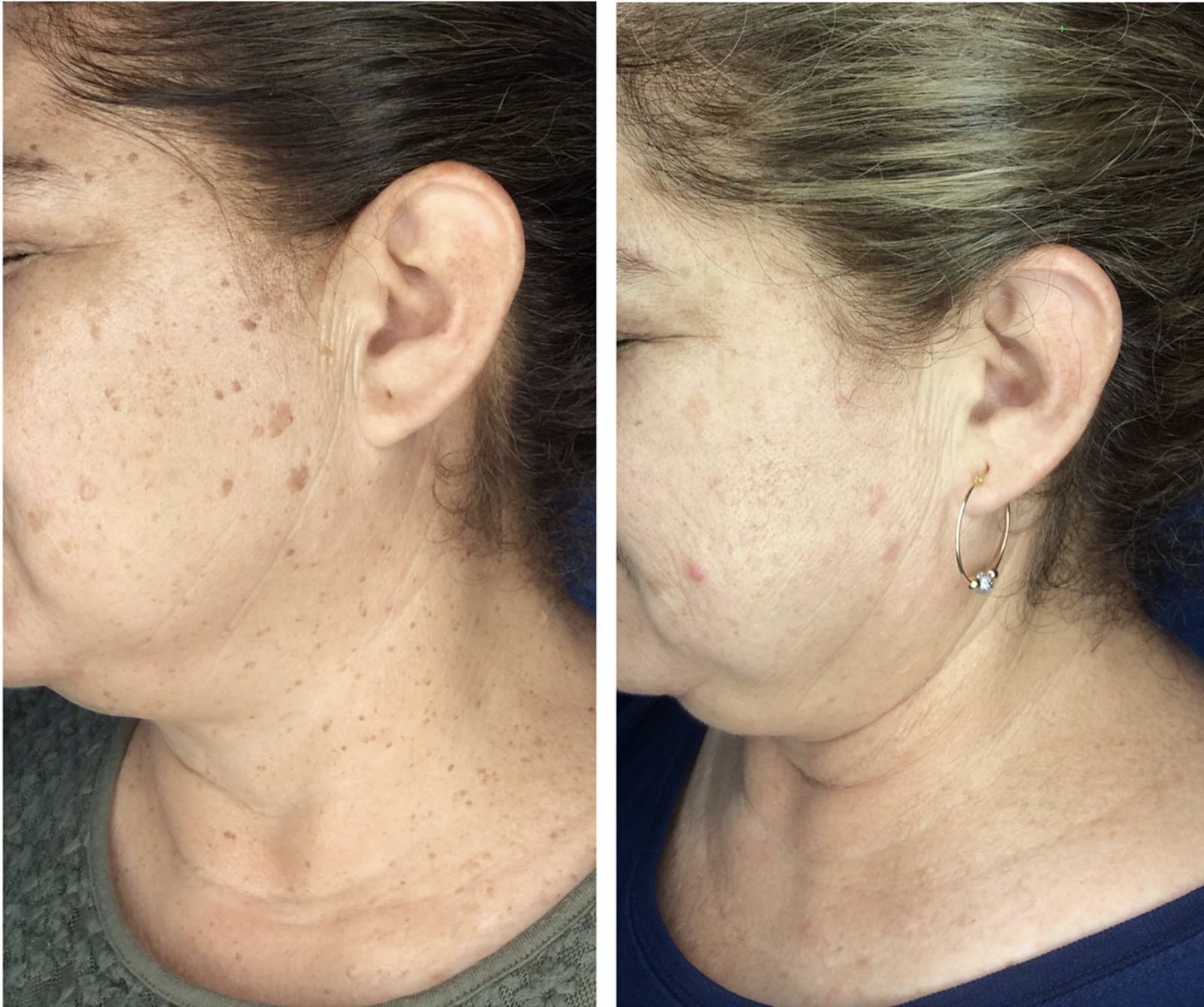
If you have a scattering of small, dark, raised bumps across your cheeks and temples, you may be looking at dermatosis papulosa nigra — DPN — a benign condition that is common on deeper skin tones and often runs in families. It is not dirt, it is not something you caused, and it is not a hygiene problem.
DPN responds very well to desiccation, and this is worth being specific about: plenty of practices either decline to treat DPN or treat it with a technique that risks leaving pale spots or dark marks on the very skin it was meant to improve. We treat all skin tones, and, as with any growth, our providers confirm the bumps are benign at your consultation before treating them.
Will they come back?
A treated tag is gone permanently. Desiccation removes it at the base, so that particular growth does not regrow.
What we will not tell you is that you are finished with skin tags forever. Whether your skin forms them is influenced by friction, genetics and other factors that a removal appointment does not change, so new tags can appear later — including in areas that have already been treated. That is not a failure of the removal. It is the same reason the first ones showed up, and new tags are treated exactly the same way.
What does skin tag removal cost in Anaheim?
$195 per visit, which includes up to 10 small skin tags, 5 medium tags, or one large tag. For most people that means one appointment and one price clears everything they came in for. If you have more than 10 tags, we'll put together a custom quote at your consultation. Because removal is cosmetic, it is typically not covered by insurance.
Not sure whether what you have is a tag at all? Bring every spot you are wondering about. Sorting that out is what the consultation is for. You can also browse the concerns we treat if texture and tone are on your mind more broadly; a medical-grade regimen will not remove a tag, but it is what keeps the skin around one looking even.
Financing available through Cherry and CareCredit — split your treatment into flexible monthly payments. Learn more →
Skin tag removal FAQ
Can I remove a skin tag at home?
We understand the temptation, but no home method is worth the risk. Tags carry their own blood supply, so cutting or tying one off can bleed more than expected, and household tools are not sterile, which invites infection. The bigger issue is diagnostic: if the growth was not actually a skin tag, home removal destroys the evidence a provider needed to examine.
How do I know if my growth is a skin tag or something else?
Honestly, you often cannot tell by looking, and neither can a photo search. Skin tags share a look with moles, seborrheic keratoses and warts, and rarely a raised spot needs medical evaluation. Anything that bleeds, itches persistently, changes size, shape or color, or simply looks unlike your other spots should be examined before any cosmetic removal.
How long does a skin tag removal appointment take?
Plan for a short visit with a longer wait. Arrive an hour early so the topical numbing cream can take effect, then the treatment itself usually runs 15 to 30 minutes, because each tag takes only seconds. Most clients clear every tag they have in that single visit and go back to work the same day.
Will skin tag removal leave a scar?
Desiccation is designed to minimize marking: the electrode touches only the tag itself, so surrounding skin is left alone, and there is no cutting or stitching. Aftercare does the rest. Keep the area clean and dry, wear SPF 30 or higher, and let the scab fall off on its own rather than picking at it.
Do skin tags grow back after removal?
A tag that has been removed does not return; desiccation is permanent, and that particular growth is gone for good. What can happen is that new tags form later, elsewhere or even in an area already treated, since friction, genetics and other factors keep influencing whether your skin makes them. New tags are treated the same way.
Follow along
Follow us for weekly before-and-afters and specials
Fresh before-and-afters, treatment videos, giveaways, and first look at our monthly specials drop on Instagram and TikTok. Give us a follow so you never miss one.
@ocskinexperts on Instagram · @skinbyneoderma on TikTok
Related Treatments
Skin Tag Removal →
Desiccation with numbing included — $195 per visit, eyelids to underarms, all skin tones.
Laser Skin Resurfacing (PicoWay Resolve) →
Picosecond resurfacing for the sun spots and uneven tone that often show up alongside tags.
Medical-Grade Skin Care →
3D skin analysis plus ZO and SkinBetter regimens to keep treated skin smooth and even.