Nobody Regrets Their Tattoo Anymore. They've Just Outgrown It.
Most tattoos clear in 4 to 8 PicoWay sessions, spaced weeks apart, starting at $225 per session in Anaheim. Ink color and density drive your timeline more than anything else — black clears fastest, blues and greens fight hardest. And you don't have to erase it: lightening for a cover-up is an option most people never hear about.
Medically reviewed by Sal Nadkarni, DO · Last updated July 31, 2026
There's a story the tattoo removal industry has been telling for twenty years, and it goes like this: you made a mistake, probably when you were young, probably when you'd been drinking, and now you're here to fix it.
It's a good story. It's just not true for most of the people who walk through our door.
What's actually happening
Talk to anyone who does this work full-time and the same thing comes up: the motivation has shifted. It's much less about regret now and much more about evolution. People change careers. They enter new relationships. They become parents. They develop a different relationship with their own body over fifteen years, which is a completely ordinary thing for a human being to do.
And there's a newer factor that has nothing to do with any of that: tattoo styles now move through trend cycles fast enough that body art can date you. A particular linework style, a particular placement, a particular font — these read as strongly of-a-moment as any haircut. Somebody who got a beautiful piece in 2015 didn't make a bad decision. They made a 2015 decision, and it's 2026.
A large share of American adults have at least one tattoo, and a meaningful share of them have thought about removal at some point. The demographic is also getting younger — we're seeing people in their twenties who want work adjusted or removed, not because anything went wrong, but because they've simply moved on from it.
None of that is regret. It's just time passing, which is the one thing tattoos were never actually built to survive.
Removal got significantly better
The version of laser tattoo removal that people are afraid of — brutal, endless, scarring — is largely a description of older technology.
We use the PicoWay laser, which fires in picosecond pulses: trillionths of a second. Because the pulse is so short, the energy shatters ink mechanically rather than by cooking the surrounding tissue. Less heat means less collateral damage to skin, and pigment broken into smaller particles is cleared more efficiently by your body.
For body tattoos, we also offer the DESCRIBE PFD Patch, which lets us safely perform substantially more laser passes in a single visit — up to four times as many. It's an optional add-on rather than an automatic part of every session: your medical provider assesses your tattoo and how your skin is responding, then decides when it can be incorporated into your treatment.
What to realistically expect
Anyone who gives you a confident number before looking at your tattoo is guessing. What actually drives the timeline:
Ink color. Black clears the most reliably. Blues and greens are more stubborn and depend heavily on having the right wavelength available — they're the colors older Q-switched lasers most often left behind. Reds, oranges, and yellows are among the harder colors for many systems, though they're workable with the right approach.
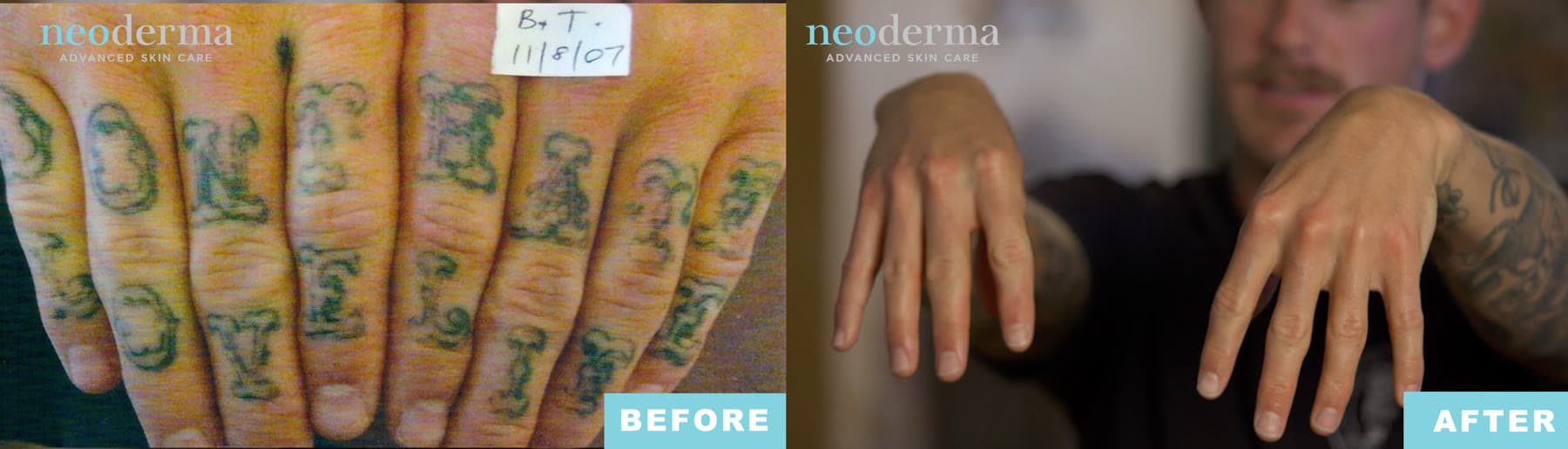
Amateur vs. professional work. Amateur tattoos generally clear faster — the ink is usually shallower and less densely packed. Professional work is deliberately built to last, and it behaves that way.
Density and layering. A fine-line piece and a heavily saturated blackwork piece are different projects. Cover-ups are the hardest category of all, because you're dealing with two or more layers of ink stacked on top of each other.
Your own biology. Your lymphatic system does the actual clearing work. Location on the body, circulation, hydration, and whether you smoke all affect the pace.
With the PicoWay laser, most tattoos clear in roughly 4 to 8 sessions, spaced weeks apart. On older nanosecond Q-switched lasers, that range was closer to 8 to 15 — and because the DESCRIBE Patch lets us make up to four times as many passes in a visit, a lot of tattoos also need fewer total visits than they otherwise would. Some pieces go faster than that. Some go slower. The honest answer for your tattoo comes from a consultation, not a blog post.
The option a lot of people don't know exists
You don't have to choose between “keep it forever” and “erase it completely.”
Lightening for a cover-up is one of the most useful and least-discussed services we offer. Instead of removing a tattoo entirely, we fade it enough that a tattoo artist has genuine freedom to design over it — rather than being forced into something dark and heavy just to hide what's underneath.
It's fewer sessions, it costs less, and it produces a dramatically better final tattoo. If you already know what you want to replace a piece with, ask about this specifically. We're happy to coordinate with your artist on how much fading they need.
Does it hurt?
It's uncomfortable. It's brief. Most people describe it as similar to being snapped with a rubber band, and the actual laser portion of most sessions is measured in minutes. We apply topical numbing cream beforehand, and patients treated with the PFD Patch generally report less pain, redness, and swelling afterward.
How much does laser tattoo removal cost?
Laser tattoo removal at Neoderma starts at $225 per session.
Your actual price depends on the size and location of the tattoo, its ink density, and its colors. The DESCRIBE PFD Patch is an optional add-on, priced by tattoo size and used when your provider determines it's right for your treatment.
You don't have to call us to find out. Measure your tattoo at its tallest and widest points in inches, and our instant estimate tool will give you a per-session price before you ever come in. A 2″ × 2″ tattoo, for example, is 4 square inches — $225 per session.
→ Get your instant estimate on our laser tattoo removal page
Two things worth knowing: if you have multiple tattoos, treating them in the same visit costs considerably less than treating them separately. And if your tattoo is outline only rather than filled in, bring it in — we'll measure it and price it in office, since the calculator assumes a filled area.
Financing is available through Cherry and CareCredit if you'd rather spread it across monthly payments.
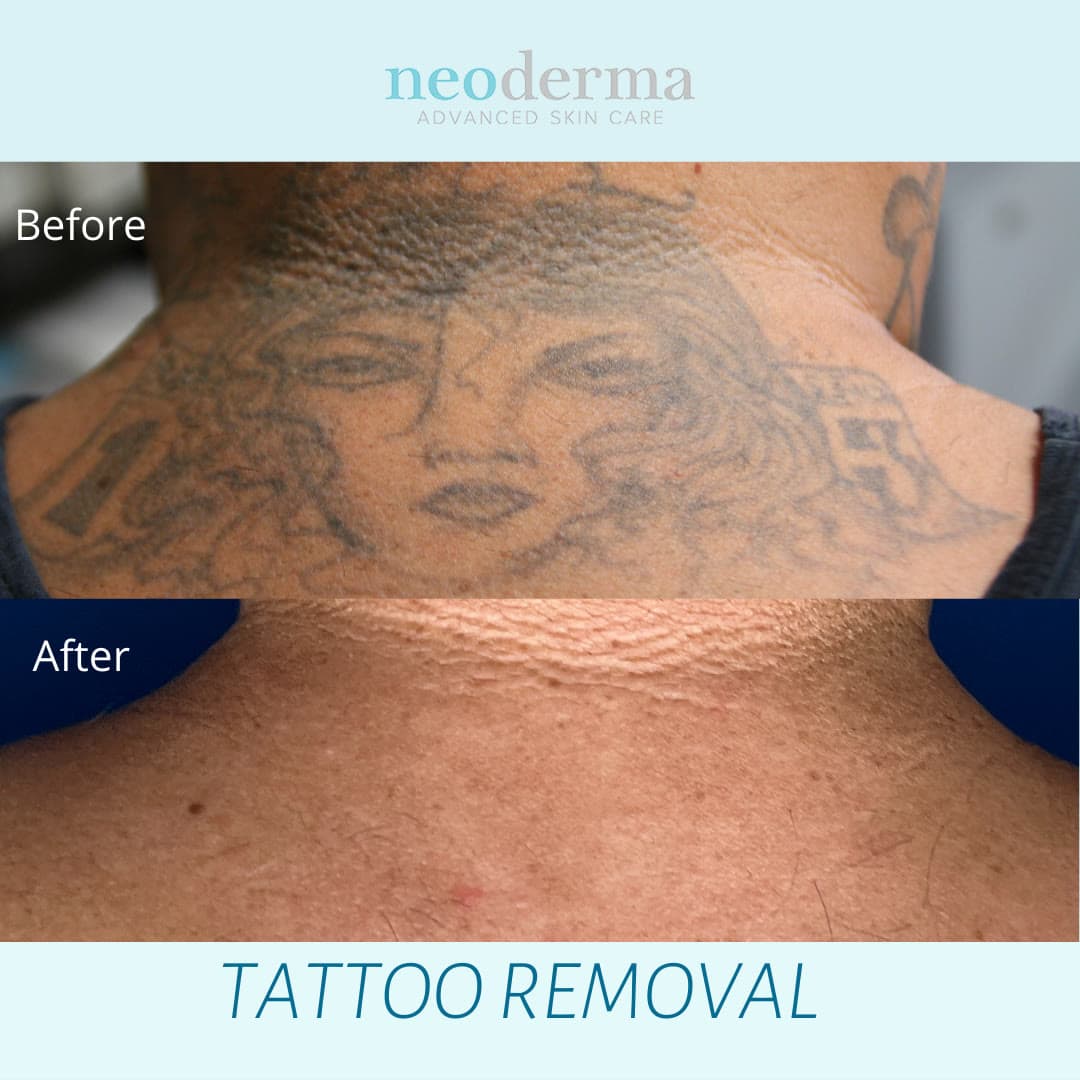
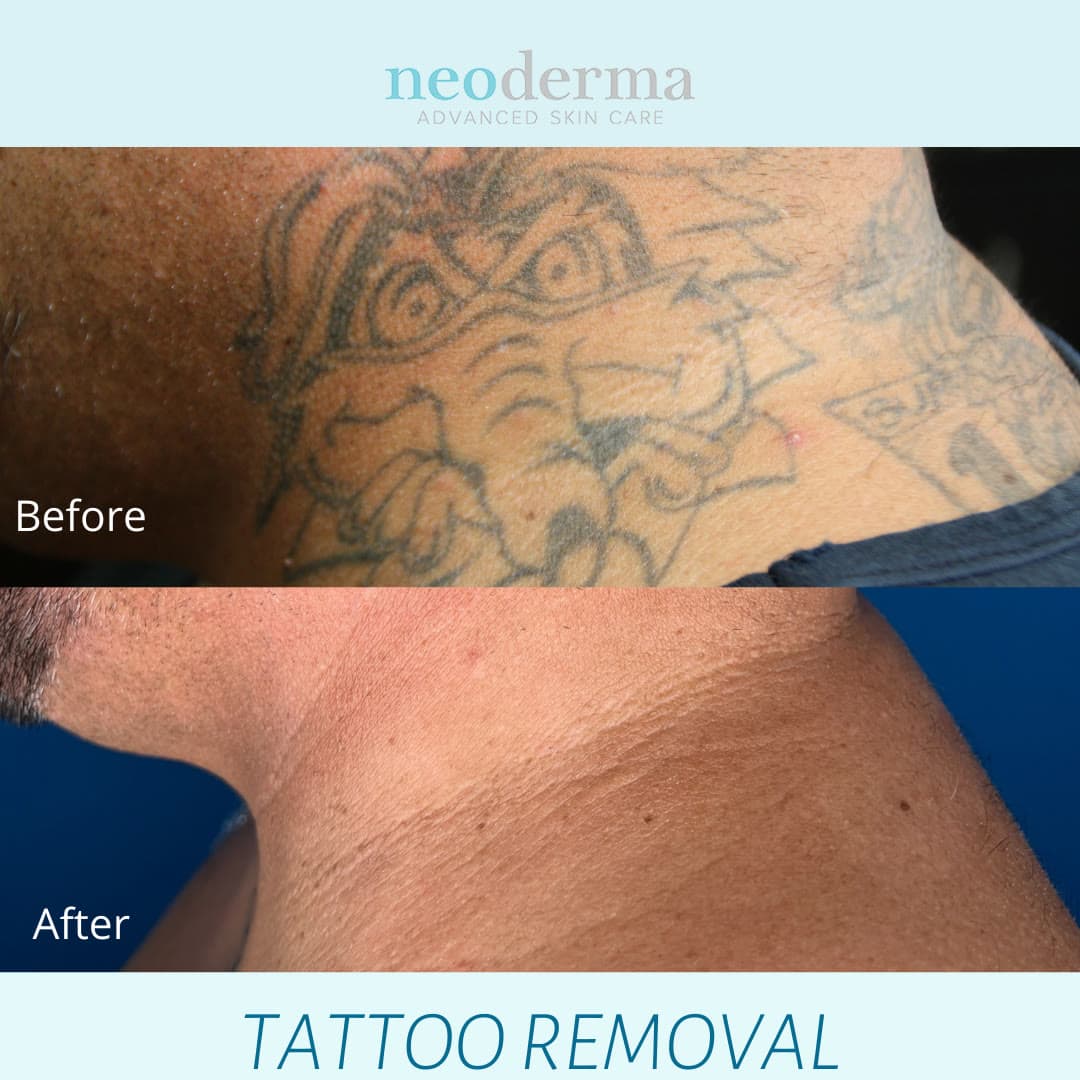
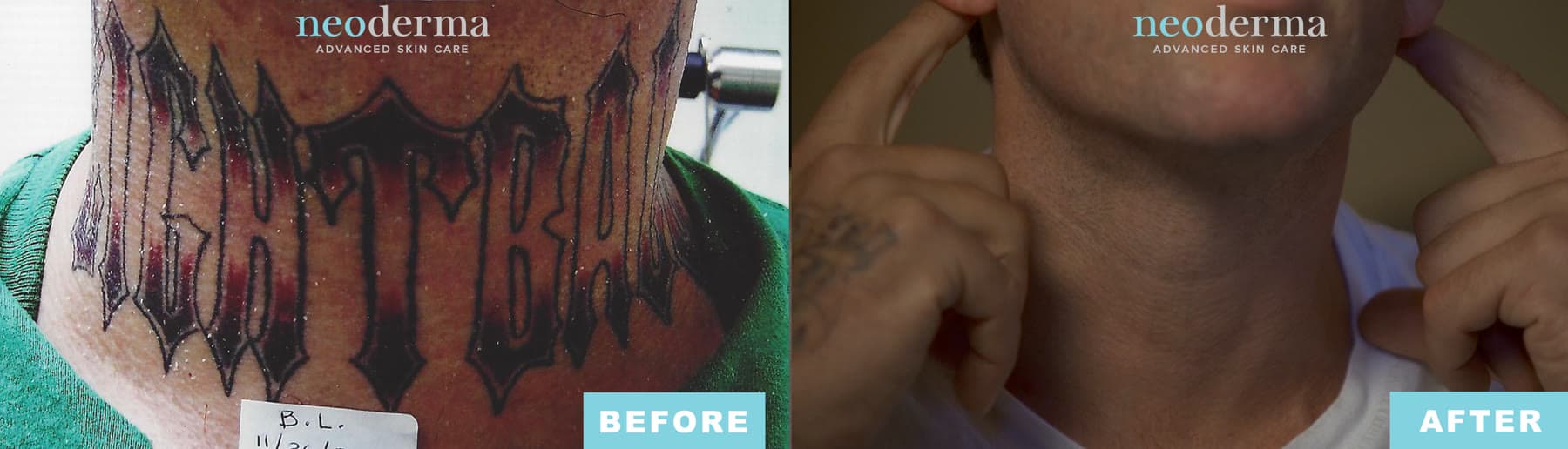
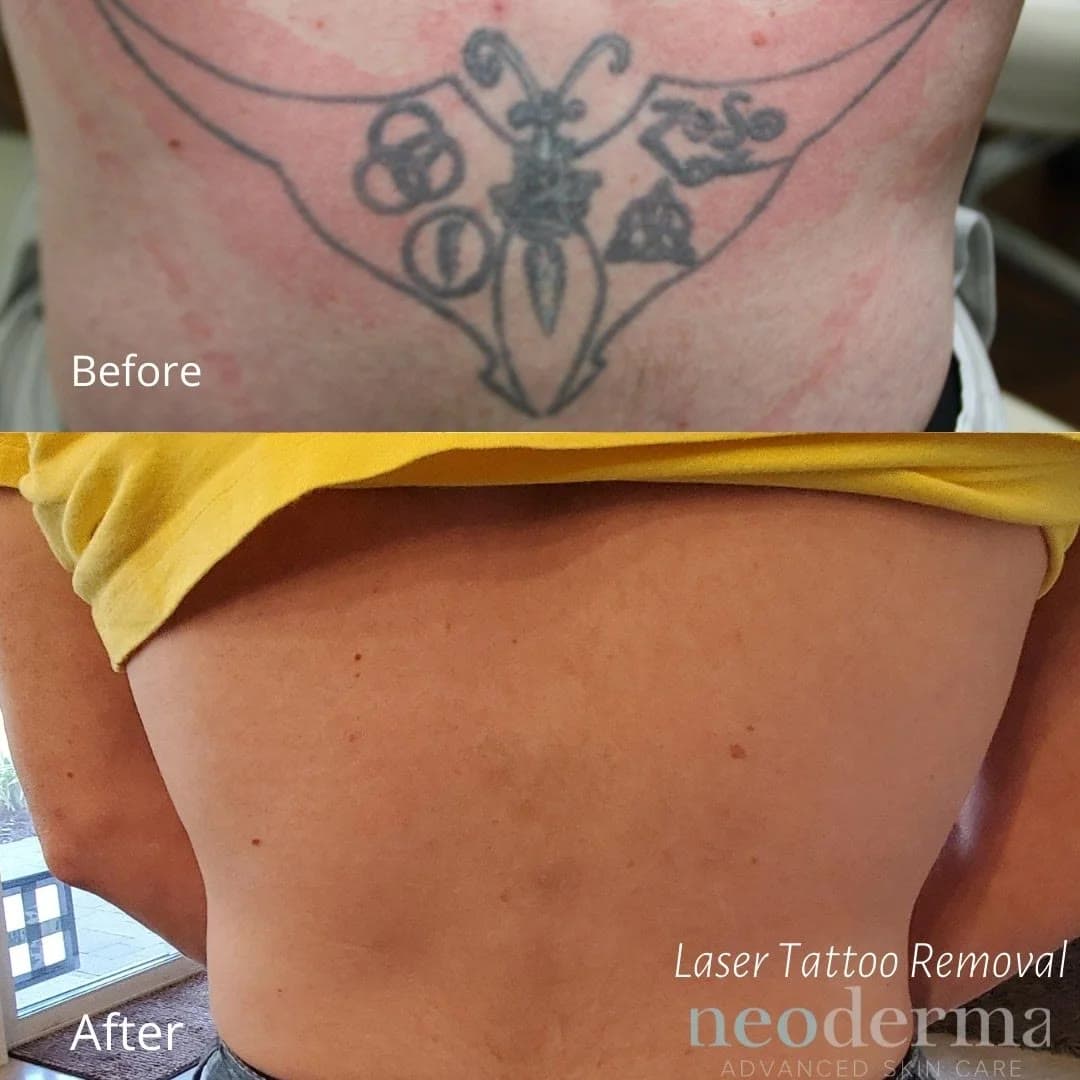
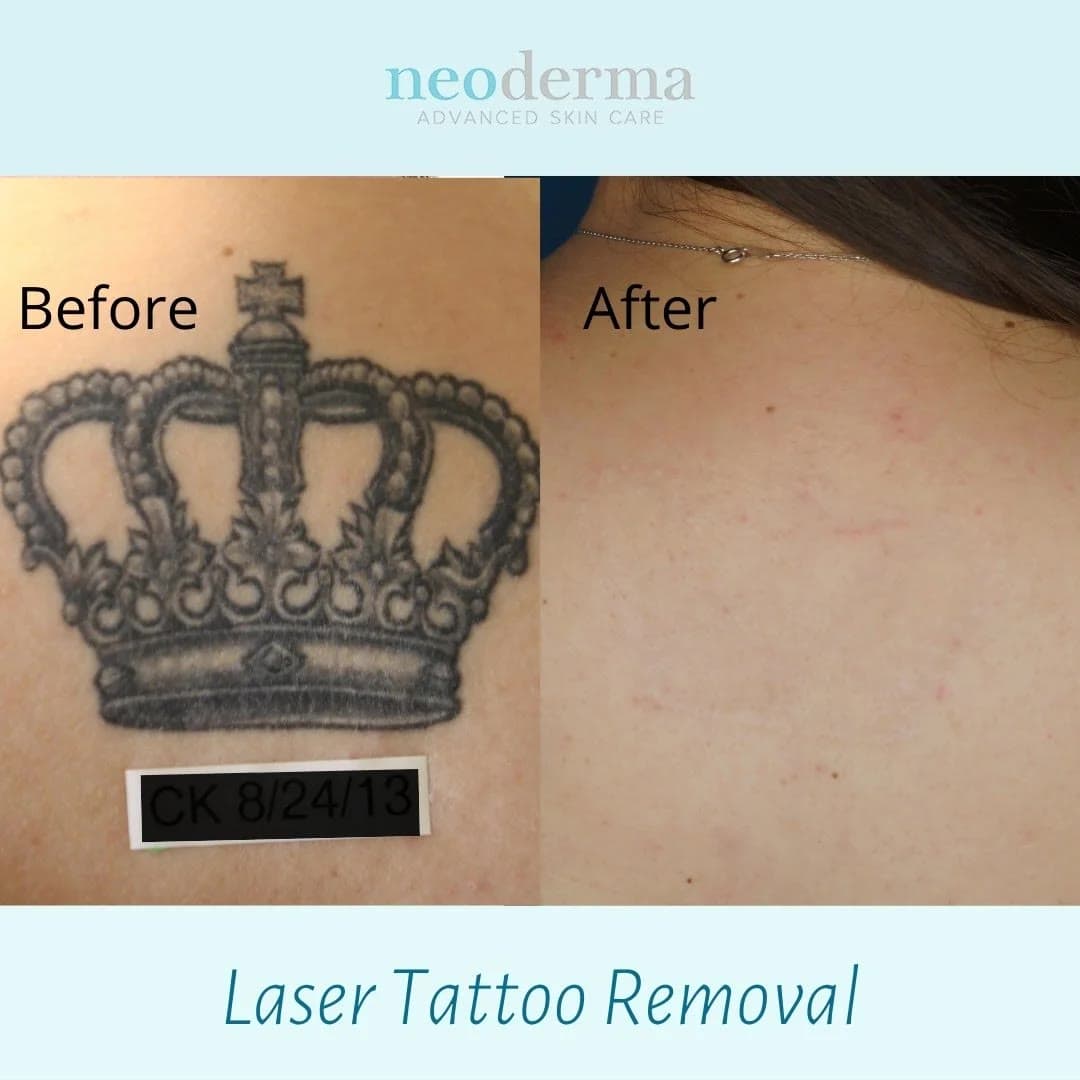
More tattoos we've cleared
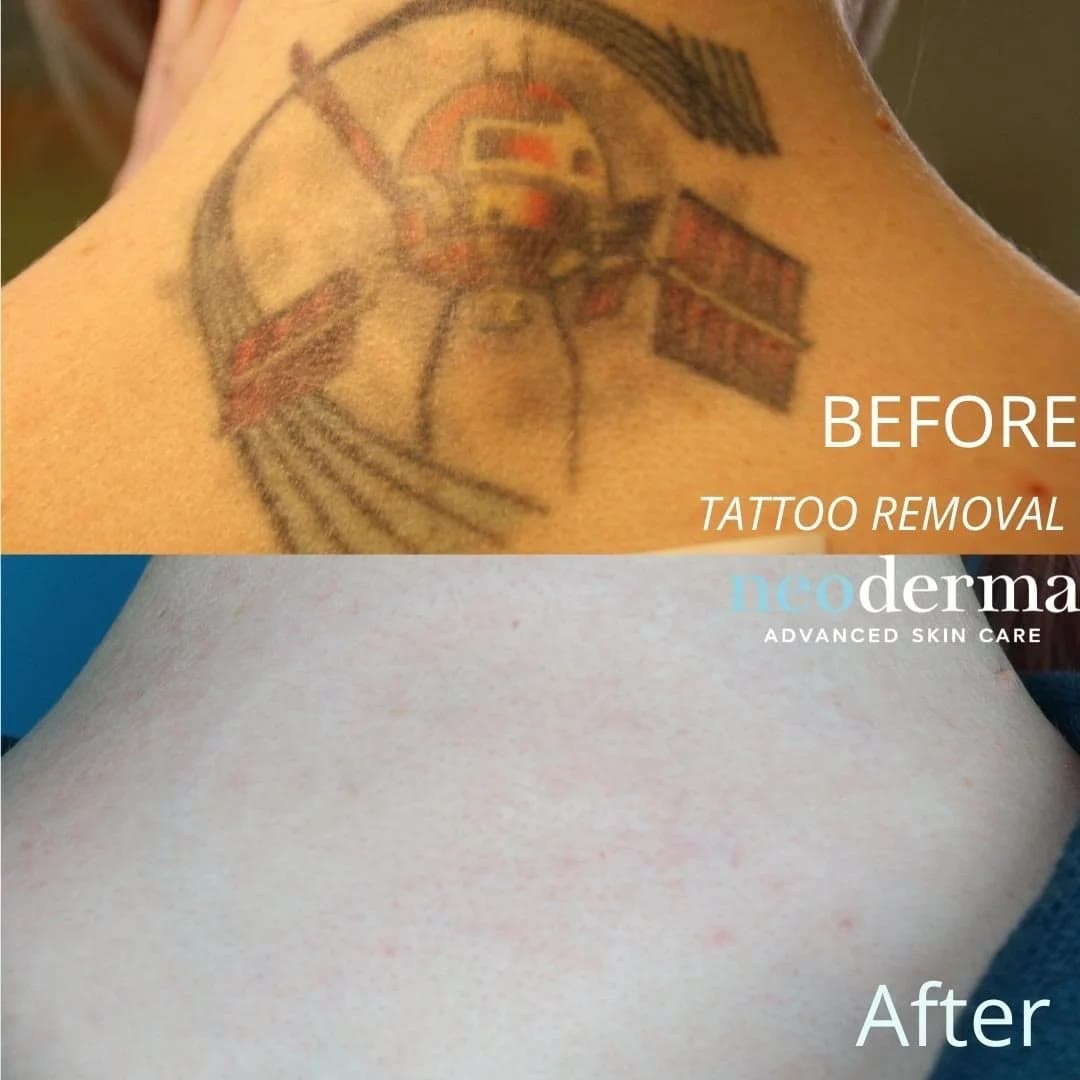
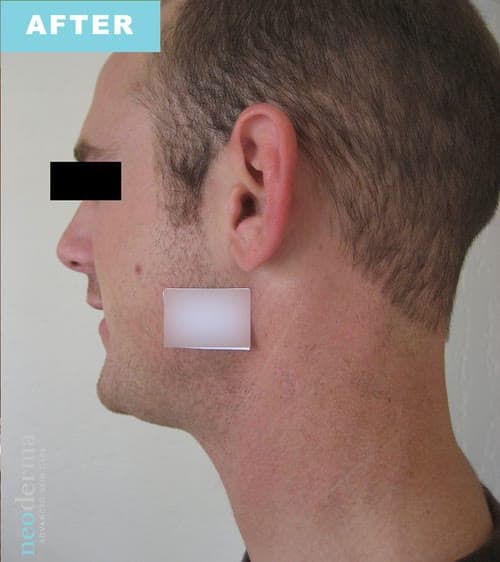
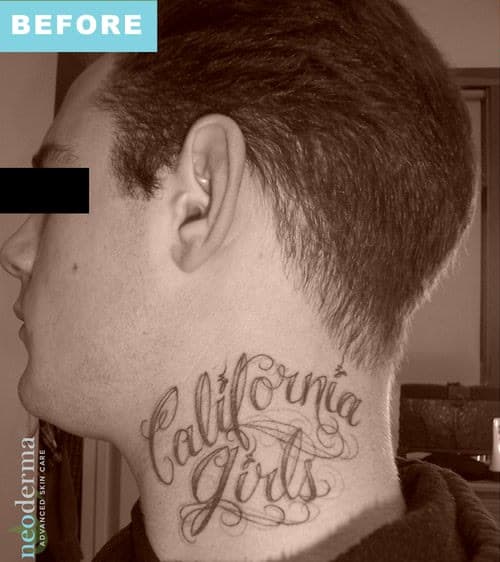
Real patients, treated with PicoWay and the DESCRIBE PFD Patch at our Anaheim clinic.
Aftercare, briefly
Keep the area clean and protected. Avoid direct sun exposure, and once healed, use sunscreen on the treated skin — sun exposure on healing tissue is the most common cause of pigment changes afterward. Skip saunas, hot tubs, and swimming until the skin has fully closed. If blistering occurs, don't pop it, and call us. Let any scabbing fall away on its own.
Your body is doing the clearing work between sessions, which is why the 6-to-8-week gap isn't arbitrary — it's the window your lymphatic system needs.
The laser matters less than the hands on it
Any clinic can buy a PicoWay. The device is the easy part.
What twenty-five years of doing this actually teaches you is how to read a specific tattoo on a specific body and set the laser accordingly — because no two cases behave the same way. Cynthia has been performing laser tattoo removal here since 2001, and between us we've done tens of thousands of laser treatments.
Here's what's actually being adjusted for, every session:
Your skin type. Settings appropriate for very fair skin can cause lasting pigment changes in deeper skin tones. This is where inexperience does the most damage, and it's not something you can undo afterward.
Ink depth and density. How deep the artist worked and how heavily they packed the pigment changes how much energy actually reaches the ink versus how much is spent on the tissue above it.
Ink color and composition. Different pigments respond to different wavelengths — and tattoo ink has never been standardized between artists, shops, or decades. Two black tattoos from two different shops can behave like completely different materials.
The age of the tattoo. A piece from 2004 has already partially broken down on its own. A piece from last year hasn't started.
Where it is on your body. Circulation varies enormously from the shoulder to the ankle, and your lymphatic system does all of the actual clearing between sessions. The same settings produce different results in different locations.
What's already been done to it. Partially treated tattoos, cover-ups, and existing scarring each change the approach — sometimes significantly.
Getting this wrong doesn't just slow your progress. It can scar, cause lasting pigment changes, or drive certain inks darker instead of clearing them. Getting it right is mostly a matter of having seen it before.
It's also why other clinics send us the cases they've struggled with — stubborn residual color, partially treated pieces, work that didn't respond the way someone expected. The same is true of eyebrow and eyeliner tattoo removal, where the margin for error is even smaller.
If you've outgrown it
Come in and get an honest assessment. We'll tell you what your tattoo is likely to take, what colors are going to fight us, and whether full removal or lightening for a cover-up makes more sense for what you actually want.
No lecture about your choices. You don't owe anybody an explanation for changing.
Laser tattoo removal FAQ
How many sessions does laser tattoo removal take?
With the PicoWay picosecond laser, most tattoos clear in roughly 4 to 8 sessions, spaced weeks apart. On older nanosecond Q-switched lasers, that range was closer to 8 to 15. Because the DESCRIBE PFD Patch lets us make up to four times as many laser passes in a single visit, many tattoos also need fewer total visits. Some pieces go faster, some slower — the honest answer for your tattoo comes from a consultation.
Does laser tattoo removal hurt?
It's uncomfortable, and it's brief. Most people describe it as similar to being snapped with a rubber band, and the actual laser portion of most sessions is measured in minutes rather than hours. We apply topical numbing cream beforehand, and patients treated with the DESCRIBE PFD Patch generally report less pain, redness, and swelling afterward.
Which tattoo ink colors are hardest to remove?
Black clears the most reliably. Blues and greens are more stubborn and depend heavily on having the right wavelength available — they're the colors older Q-switched lasers most often left behind. Reds, oranges, and yellows are among the harder colors for many systems, though they're workable with the right approach. Ink has never been standardized between artists or decades, so two black tattoos can behave like different materials.
How much does laser tattoo removal cost in Anaheim?
Laser tattoo removal at Neoderma starts at $225 per session. Your actual price depends on the size and location of the tattoo, its ink density, and its colors; the DESCRIBE PFD Patch is an optional add-on priced by tattoo size. Measure your tattoo at its tallest and widest points in inches and our instant estimate tool gives you a per-session price before you come in. Financing is available through Cherry and CareCredit.
Can I lighten a tattoo for a cover-up instead of removing it?
Yes — and it's one of the most useful and least-discussed services we offer. Instead of removing a tattoo entirely, we fade it enough that a tattoo artist has genuine freedom to design over it, rather than being forced into something dark and heavy to hide what's underneath. It's fewer sessions, it costs less, and it produces a dramatically better final tattoo. We're happy to coordinate with your artist.
Follow along
Follow us for weekly before-and-afters and specials
Fresh before-and-afters, treatment videos, giveaways, and first look at our monthly specials drop on Instagram and TikTok. Give us a follow so you never miss one.
@ocskinexperts on Instagram · @skinbyneoderma on TikTok
Related Treatments
Laser Tattoo Removal →
PicoWay picosecond removal with the DESCRIBE PFD Patch — instant per-session estimate from $225.
Eyebrow & Eyeliner Tattoo Removal →
Specialist removal of microbladed brows and permanent eyeliner, $350 per session.
Laser Skin Resurfacing (PicoWay Resolve) →
The same picosecond platform, used to smooth texture and clear pigment.