Thinning Hair Isn't Just a Men's Problem
Hair thinning affects women too — it just looks different. Female-pattern thinning is usually diffuse: a widening part and less density overall, rather than a receding hairline. At Neoderma in Anaheim we support thinning hair non-surgically with a provider-administered growth-factor scalp protocol — one session a week for 12 weeks, no surgery, no downtime.
Medically reviewed by Sal Nadkarni, DO · Last updated August 6, 2026
Why does women's hair loss look different from men's?
Most people picture hair loss as a receding hairline and a bald crown. That is the male-pattern map, and it usually isn't what happens to women.
Female-pattern thinning is typically diffuse. Instead of a defined bald spot, density drops across the top of the head, so the part line slowly widens and more scalp shows through in bright light or in photos. Regrowing hair can come in finer, too, so the whole ponytail feels thinner even when the hairline looks untouched.
That difference matters more than it sounds. A bald patch is obvious; a gradual loss of density is not. Women often adapt — part the other way, reach for volume products — and only recognize the pattern once a fair amount of density is already gone. If you've been wrapping the hair tie an extra time, or you notice more scalp in flash photos than you used to, you're noticing something real.
What causes female-pattern thinning?
There is rarely a single cause. The common contributors are hormonal shifts — including postpartum and the years around menopause — genetics, which can come from either side of your family, plus stress and nutritional factors. Often several overlap at once, which is why the thinning can feel like it started out of nowhere.
By the time most women bring this up with us, they have already worked through the shelf: volumizing shampoos, thickening sprays, supplements, often over-the-counter minoxidil. What frustrates people isn't usually a lack of effort — it's the daily upkeep and how hard the results are to read month to month.
Two things worth saying plainly. We don't diagnose hair loss at Neoderma; naming a cause is a physician's job, and we treat the cosmetic concerns people bring us. And scalp skin is skin — the same inflammation, buildup, and sun exposure that affect your face affect the ground your hair grows out of, which is why a medical-grade skin care plan often sits alongside treatment.
When should you see a doctor first?
Start here, because it's the part most articles skip.
Some hair loss is a signal, not a cosmetic issue. Loss that comes on suddenly, falls out in round smooth patches, or accelerates quickly deserves a medical evaluation before any aesthetic treatment. So does thinning that comes with scalp symptoms — pain, burning, itching, scaling, redness, or areas that look shiny and scarred — or that shows up alongside other changes in how you feel. Those patterns can point to an underlying condition, and treating the appearance without looking at the cause is doing it backwards.
A physician or dermatologist can work that up properly. It's not a delay; it's the right order. If your thinning is the slow, diffuse, both-sides kind that has crept along for years, an aesthetic conversation is reasonable — and if what we see at your consultation raises a flag, we'll tell you and send you for evaluation first.
How does non-surgical hair restoration work?
In a thinning scalp, most follicles aren't gone. They're under-signaled — cycling shorter, resting longer, producing finer strands each round. That is the window this treatment aims at.
Neoderma's hair restoration is a non-surgical, provider-administered protocol that delivers a concentrate of clinically studied growth factors and signaling proteins to the scalp through a precise, minimally invasive technique. Those signals help move dormant follicles back toward their active growth phase, so existing hair grows thicker and shedding slows — and the gentle stimulation itself supports circulation and the scalp's own repair response.
The schedule is one session per week for 12 weeks, about 30 minutes each. No surgery, no transplant, no incisions, no stitches. Numbing is available for comfort, and mild scalp redness or tenderness for a few hours is the extent of the recovery.
Two points of clarity: this is an aesthetic treatment for hair loss. The product is FDA-listed, which is not the same as FDA approval or clearance — listing means it is on file with the FDA, not that the FDA has evaluated it for hair growth. And the specific formulation and technique are exclusive to Neoderma — our team found the protocol in Korea and brought it home to Anaheim — so we walk you through exactly what it is in person, at your consultation.
What do the studies actually show?
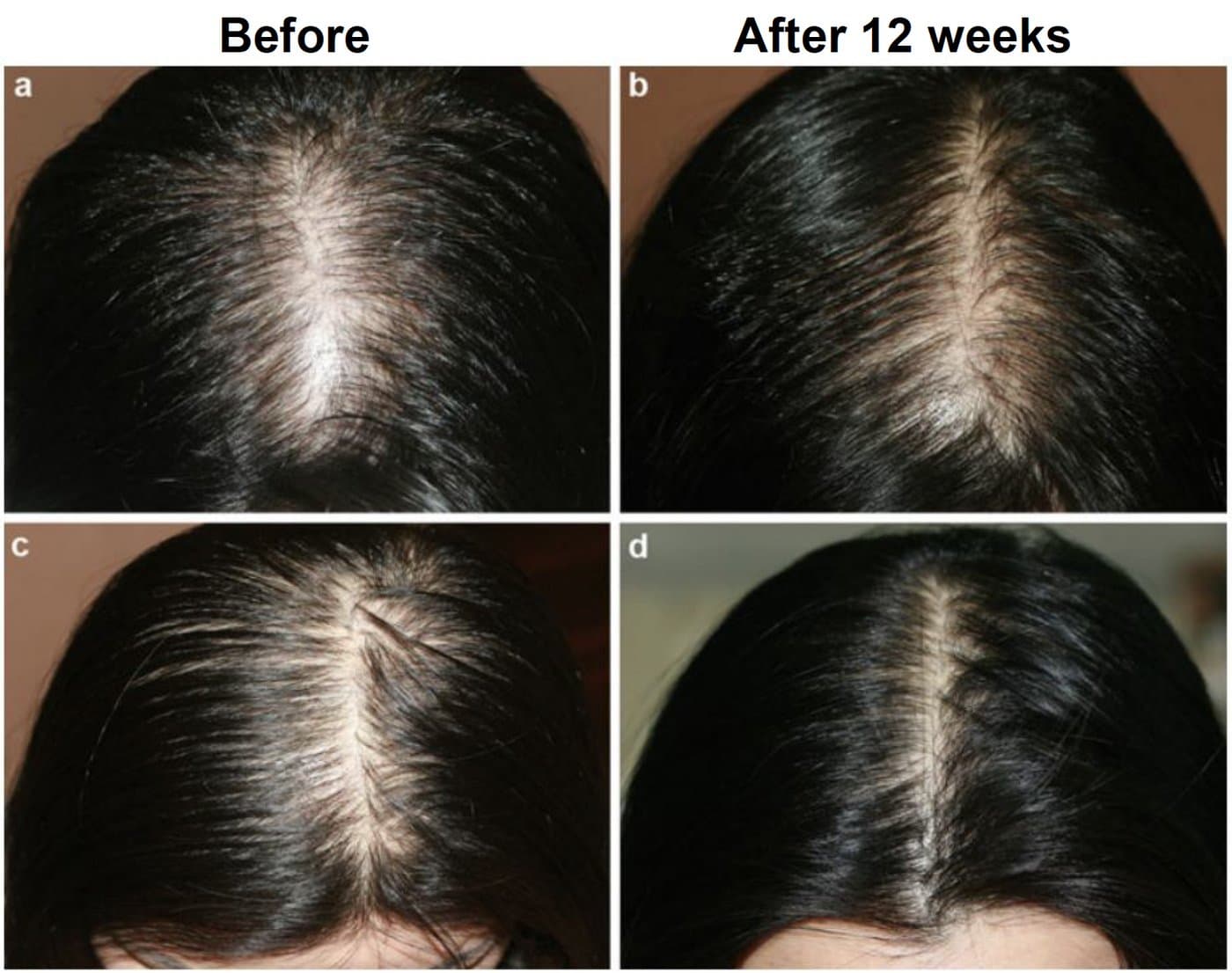
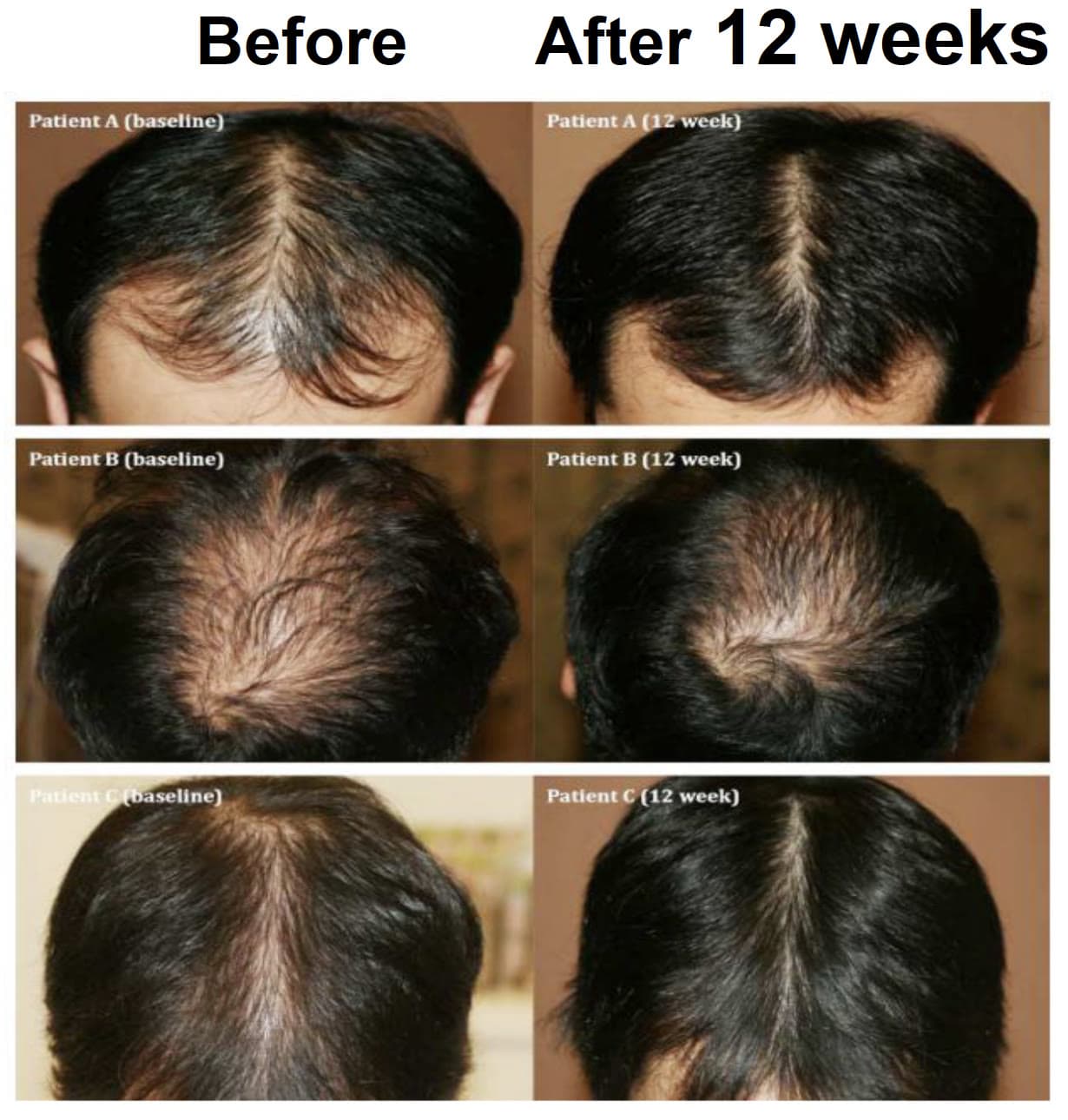
Modest and real is the honest summary. The treatment approach we use has been evaluated in published, peer-reviewed clinical studies of both men and women, following the same weekly 12-week protocol we do. In the men's study, hair count and hair thickness each increased by roughly 11% over 12 weeks. In the women's study, hair density and thickness increased versus baseline, and among participants followed for six months to a year afterward, the improvement was maintained.
It's worth sitting with that 11% for a second, because what it means in the mirror is specific: a part line that photographs narrower, strands with more body, a ponytail that feels denser in your hand. Not a new head of hair. Those changes build gradually across months, and individual results vary with age, the stage of thinning, and how consistently you finish the course. The before-and-after photos on this page come from those clinical studies rather than from our own patients.
What does it cost in Anaheim?
Because the protocol runs weekly across 12 weeks, we price it as a 12-week package rather than per session — matched to how much scalp we're treating and what you're trying to achieve. You'll get an exact quote at your free consultation, along with an honest read on whether you're a good candidate at all. We would rather tell you no than sell you 12 weeks of something that won't help you.
Financing available through Cherry and CareCredit — split your treatment into flexible monthly payments. Learn more →
What should no one promise you?
Your hair back. Not us, not a clinic on Instagram, not a supplement ad — nobody should promise you that. If someone does, treat it as your cue to leave.
What is fair to say is this. The protocol supports follicles that are still alive, so it works best when you start earlier, while there is still something to support — it can't restore an area that is completely bald. Results are gradual, they vary from person to person, and holding them takes a maintenance plan rather than a finish line. It's an aesthetic treatment, not a cure.
If that framing sounds right to you, the next step is a consultation: an honest look at your scalp, a straight answer about whether this is your problem to treat, and real numbers before you decide anything.
Women's hair thinning FAQ
How do I know if my hair is thinning or if I'm shedding normally?
Everyone sheds hair daily, and hair grows in cycles, so some loss is expected. What suggests pattern thinning is a change in density over time: a part line that photographs wider, more scalp showing in bright light, or a ponytail that needs an extra wrap. Sudden, patchy, or rapid loss is a different situation and warrants a medical evaluation.
Does non-surgical hair restoration work for women?
In the published women's study of this treatment approach, participants treated weekly for 12 weeks saw hair density and thickness increase versus baseline, and among those followed for six months to a year afterward the improvement was maintained. It supports follicles that are still active, so it suits early-to-moderate thinning. It's an aesthetic treatment. The product is FDA-listed, which is not the same as FDA approval or clearance — listing means it's on file with the FDA, not that the FDA has evaluated it for hair growth.
How long does it take to see a difference?
Hair grows slowly, so nothing changes overnight. Most people notice reduced shedding first, then early density around 8 to 12 weeks, with fuller results building over the following months. The studied protocol is one session per week for 12 weeks, and a maintenance plan helps hold what you gain. Results vary with age and the stage of thinning.
Is it surgery, and is there downtime?
No. There's no transplant, no incisions, and no stitches. Each session takes about 30 minutes, discomfort is minimal, and numbing is available for comfort. Afterward you may have mild scalp redness or tenderness for a few hours. You can wash your hair the next day and return to normal activity right away.
What does hair restoration cost in Anaheim?
Because it's a weekly series across 12 weeks, we price it as a package matched to your scalp and your goals rather than per session, and you'll get an exact quote at your free consultation. Financing is available through Cherry and CareCredit so you can spread the cost across the treatment course.
Follow along
Follow us for weekly before-and-afters and specials
Fresh before-and-afters, treatment videos, giveaways, and first look at our monthly specials drop on Instagram and TikTok. Give us a follow so you never miss one.
@ocskinexperts on Instagram · @skinbyneoderma on TikTok
Related Treatments
Hair Restoration →
Non-surgical growth-factor scalp protocol — weekly sessions across 12 weeks, no downtime.
Medical-Grade Skin Care →
3D skin analysis and a customized regimen for healthy skin from the scalp down.
Microneedling (Secret RF & Exceed) →
Collagen-boosting microneedling for acne scars, pores, and skin tightening.