What Are Exosomes? The Skin Treatment Everyone's Talking About
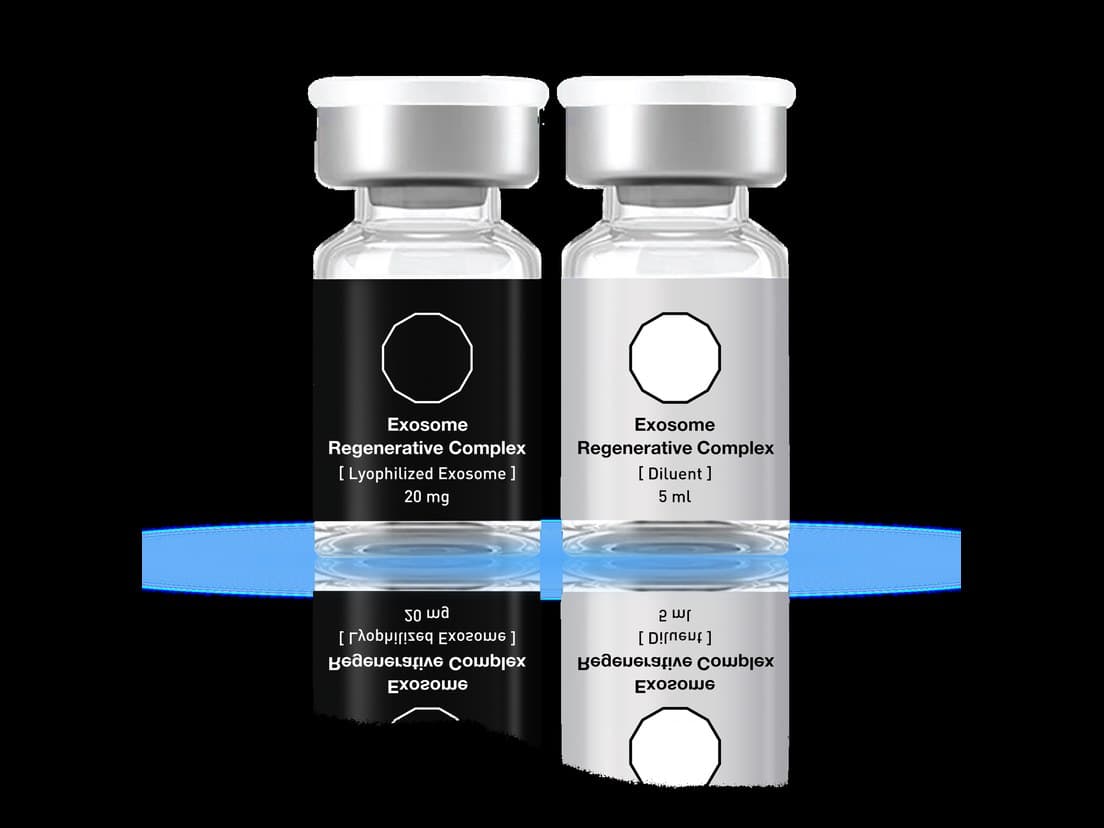
Exosomes are nano-sized signaling packets released by cells — loaded with growth factors, proteins, and lipids that tell skin cells to repair and build collagen. They are not stem cells. At Neoderma in Anaheim we apply BENEV's Exosome Regenerative Complex topically right after XTherma radiofrequency, as an add-on starting at $250.
Medically reviewed by Sal Nadkarni, DO · Last updated August 21, 2026
What exactly is an exosome?
An exosome is an extracellular vesicle — a microscopic packet that cells release to communicate with one another. Each packet carries a cargo of growth factors, proteins, and lipids that act as instructions, telling nearby skin cells to repair damage and produce collagen. In short: they're messengers, not cells.
That last part matters, because the internet keeps calling this a “stem cell facial,” and it isn't one. Exosomes contain no living cells and no DNA payload that “becomes” anything in your skin. A useful analogy: if a cell were a person, an exosome would be the voicemail it leaves — a set of instructions the receiving cell can act on. Your own cells do the actual work; the exosomes just deliver the message to get started.
Why is everyone suddenly talking about exosomes?
Exosome cosmeceuticals are one of the fastest-growing categories in aesthetics — one industry analysis (BioInformant) projects category growth on the order of 557%. They're part of the same regenerative-aesthetics wave that made PDRN and the “salmon sperm facial” a household topic: instead of filling or freezing the skin, these treatments try to nudge it into repairing itself. Exosomes are the newest — and least proven — member of that family, which is exactly why the hype needs a fact-check.
What does the research actually show?
The honest answer: the research is early and promising, not settled. Small studies have looked at topical exosomes applied after in-office procedures and reported faster visible calm-down — less redness and downtime as skin recovers. There are no large controlled trials yet, and no basis for disease-treatment claims of any kind. We think the biology is genuinely interesting and the post-procedure use case is the best-supported one — which is precisely how we use it. If a clinic tells you exosomes will regrow, reverse, or cure anything, walk out.
How do we use exosomes at Neoderma?
We apply BENEV's Exosome Regenerative Complex topically, immediately after an energy treatment — most often XTherma radiofrequency skin tightening, where the treatment primes the skin to absorb it while the collagen response is being triggered. The add-on starts at $250. BENEV is also the U.S. distributor of the XTherma device itself, so we know this product line first-hand rather than through a sales rep's brochure.
In BENEV's reported testing, exosome signaling increased collagen production by up to 300% and fibroblast production by up to 180%. Those are manufacturer figures, not outcomes measured at Neoderma — we share them for context, with that label attached.
Exosomes vs. PDRN vs. growth-factor serums
All three get marketed as “regenerative,” but they're different molecules with different delivery — and delivery is most of what determines results. Exosomes are signal packets applied after a treatment; PDRN is salmon-DNA fragments carried in by microneedling; growth-factor serums sit on intact skin.
| Exosomes (BENEV) | PDRN (Rejuran) | Growth-factor serums | |
|---|---|---|---|
| What it is | Nano-sized vesicles carrying growth factors, proteins & lipids — cell-to-cell repair signals | Purified DNA fragments (polydeoxyribonucleotide) sourced from salmon | Individual growth-factor proteins in a cosmetic serum |
| Where it comes from | Released by cells as part of normal cell-to-cell communication | Extracted, sterilized & purified from salmon DNA | Varies by brand |
| How it's applied | Topically, immediately after an energy treatment — we pair it with XTherma RF | In-office with microneedling (Rejuran) — micro-channels carry it in | At home, on intact skin |
| Evidence level | Early & promising — small studies on post-procedure healing; no large controlled trials | Years of use in Korean & European aesthetic medicine; supportive research | Limited — large molecules penetrate intact skin poorly |
| Price at Neoderma | Add-on starting at $250 | Rejuran from $1,055 for 2 mL | Not offered — retail product, varies by brand |
Curious about the PDRN column? We covered it in depth in our salmon sperm facial explainer, and Rejuran lives on our Korean skin care page.
Are exosomes FDA approved? Straight talk
No. In the U.S., exosome skincare products are regulated as cosmetics, not FDA-approved drugs — no exosome product has been through the FDA's drug approval process for any skin indication. Injecting exosomes is not an FDA-sanctioned use, and it's not something we do: at Neoderma, exosomes are applied topically only, immediately after your treatment. Some practices blur these lines. We'd rather you hear the regulatory reality plainly, decide with clear eyes, and ask us anything about it at your consultation.
Who actually benefits — and who should skip it?
The best candidates are people already having an energy treatment: exosomes are strongest as a post-procedure recovery boost — supporting a faster visible calm-down after radiofrequency or microneedling-type treatments — and as a glow-and-texture add-on for skin-quality seekers across Anaheim and Orange County.
The honest limit: on intact, unbroken skin, absorption of these large biological particles is limited. That's exactly why we pair exosomes with an energy treatment instead of selling them as a standalone miracle — and why we won't recommend the add-on if you're not having a treatment that lets it work. Whether it makes sense for your skin is decided at your consultation, not at checkout.
What do exosomes cost in Anaheim?
At Neoderma, the BENEV exosome add-on starts at $250, applied immediately after your session. It's most often added to XTherma, where founding-patient pricing is currently $895 for the full face (regularly $1,200). Your provider confirms the protocol — and whether the add-on is worth it for your goals — at your consultation.
Financing available through Cherry and CareCredit — split your treatment into flexible monthly payments. Learn more →
Exosome FAQ
What are exosomes in skin care?
Exosomes are extracellular vesicles — nano-sized packets that cells release to communicate with one another. Each one carries growth factors, proteins, and lipids that act as signals, instructing skin cells to repair themselves and produce collagen. In aesthetics they're applied to the skin, most effectively immediately after an energy treatment, to support recovery and skin quality.
Are exosomes stem cells?
No. Exosomes are not cells at all — they're the message, not the messenger. They contain no living cells and no DNA payload that "becomes" anything in your skin. Think of them as packets of instructions released by cells, which is also why the shorthand "stem cell facial" you see online is misleading.
Are exosome treatments FDA approved?
No — and any clinic that implies otherwise is overstating things. Exosome skincare products in the U.S. are regulated as cosmetics, not FDA-approved drugs. Injecting exosomes is not an FDA-sanctioned use; at Neoderma they are applied topically only, immediately after treatment. The research is early and promising, but there are no large controlled trials yet, so we make no disease-treatment claims.
How much do exosomes cost at Neoderma in Anaheim?
The BENEV exosome add-on starts at $250, applied immediately after your treatment — most often XTherma radiofrequency, where founding-patient pricing is currently $895 for the full face (regularly $1,200). Financing is available through Cherry and CareCredit, and your provider confirms the right protocol at your consultation.
Can I just use an exosome serum at home instead?
You can, but expect modest results. On intact, unbroken skin, absorption of these large biological particles is limited — which is exactly why we apply exosomes immediately after an energy treatment, while the skin is primed to take them in. Timing and delivery are most of what you're paying for.
Are exosomes better than PDRN (the salmon sperm facial)?
They're different tools. PDRN is purified salmon-DNA fragments delivered into the skin with microneedling — at Neoderma, Rejuran starts at $1,055 for 2 mL over a short series. Exosomes are cell-signaling packets applied topically right after an energy treatment, as an add-on starting at $250. PDRN has more years of clinical use behind it; exosomes are the newer science. Neither adds volume like a filler.
Follow along
Follow us for weekly before-and-afters and specials
Fresh before-and-afters, treatment videos, giveaways, and first look at our monthly specials drop on Instagram and TikTok. Give us a follow so you never miss one.
@ocskinexperts on Instagram · @skinbyneoderma on TikTok
Related Treatments
XTherma Skin Tightening →
High-frequency RF + cryogen collagen remodeling — the treatment we pair BENEV exosomes with.
Secret RF Microneedling →
Fractional RF microneedling for texture, acne scars, and pores — another collagen-building energy treatment.
Korean Skin Care (K-BioGlow & Rejuran) →
The glass-skin menu: K-BioGlow radiance ritual and Rejuran polynucleotide skin boosters.